Original story posted on the The Beat, an internal newsletter.
A region-wide initiative is underway to reshape how equipment is stored, tracked and shared to improve efficiency and reduce waste.
Ensuring the right equipment reaches the right patient, at the right time, is vital in delivering safe and effective care. As our health system evolves with changing needs and challenges, building a more resilient approach to equipment management has become essential to help reduce delays, support safety, improve the care experience and reduce waste.
Supported by the Ministry of Health Climate Innovation Fund, Fraser Health launched a region-wide project to better understand how equipment is stored, tracked and shared. Over the past year, the project team has conducted site audits, reviewed internal data and engaged with leaders, direct care staff, foundations, vendors and patient partners. Findings have helped reveal how and where equipment is being used, and where improvements can deliver meaningful benefits for care teams and patients.
During one site’s spring cleaning, they found that 42 per cent of removed equipment was still in working condition and could be redeployed to areas of need. Tests using UV-reactive “glow” markers at several sites showed that some high-demand equipment sat unused for extended periods. These results are not the fault of any site; rather, they highlight gaps in processes such as tracking, logistics, temporary storage and system-wide visibility.
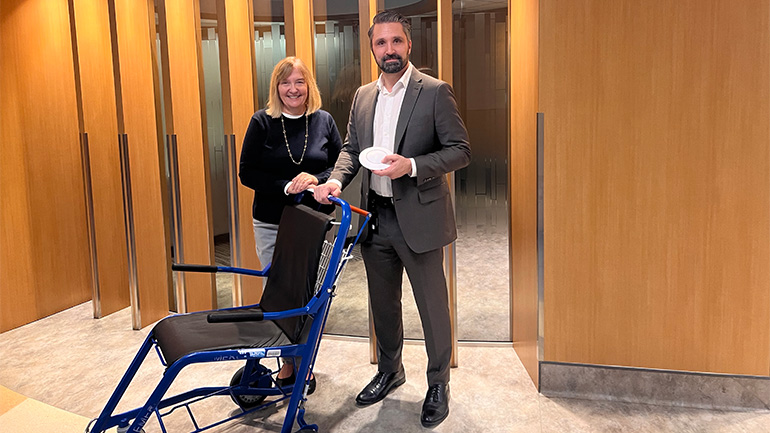
To help address these challenges, a pilot is currently underway at Ridge Meadows Hospital to track equipment movement, beginning with Staxis. Led by Morgan Cartier, project lead, and Cathy Giles, consultant and former director of Clinical Operations at Ridge Meadows Hospital, the pilot tests how real-time tracking can provide a clearer understanding of equipment flow, reduce redundancy and improve utilization. The team is also exploring Radio Frequency Identification (RFI) inventory tagging to enhance count accuracy, streamline transfers between sites and support more structured maintenance and repair processes.
The gaps we’ve identified highlight enormous potential,” Morgan says. “With the right tools and processes, we can streamline how equipment moves, improve utilization and reduce pressure on both staff and budgets.”
The next phase of the project focuses on developing smarter, more resilient systems for equipment sharing, reuse and temporary storage. This includes testing new tracking technologies, assessing centralized logistics models and creating processes that support more transparent and sustainable equipment flow.
Everyone can contribute to this shift by:
- Improving storage practices,
- Reporting unused equipment and
- Supporting site-level audits
All help strengthens Fraser Health’s ability to reuse, track and redeploy valuable assets. Together, these efforts will help reduce waste, reclaim space, lower environmental impact and ensure equipment reaches the patients who need it most when they need it.