


Original story posted on the The Daily Scan.
In 2024, Providence Health Care started a new project called Trees for Health. Over the next few months, up to 50 trees were planted at Providence care sites. The trees are primarily local to B.C. and were chosen to support local birds, insects, and wildlife.
Planting days and people involved
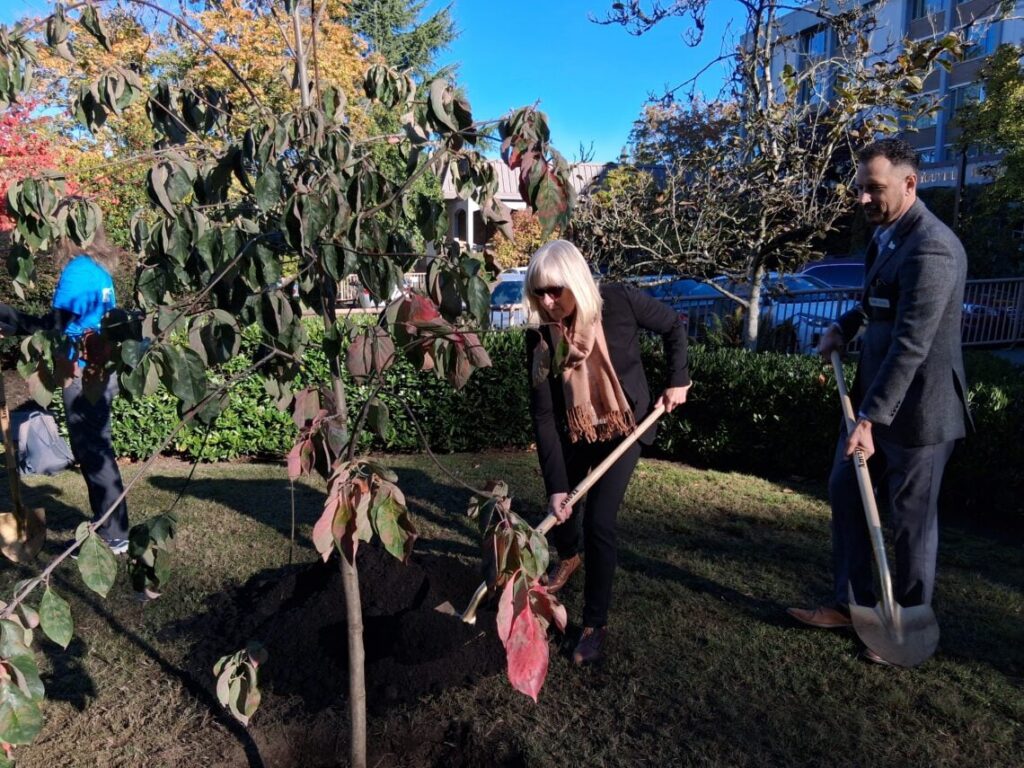
In April, PHC planted trees at St. Vincent’s: Langara. On October 6, more trees were planted at Holy Family Hospital. On October 14, planting continued at Youville Residence.

Staff, residents, and community members helped with the planting. Some used golden shovels, others packed soil around the trees. Everyone was welcome to join, even if they hadn’t signed up in advance.
By planting trees, Providence is taking another small step towards sustainability efforts to address the loss of biodiversity and climate change, as well as adding beauty to environments and providing health and wellness benefits for residents, patients and staff,” said Theresa McElroy, PHC Corporate Director of Strategic Planning and co-chair of the grassroots Providence Environmental Stewardship Team (ESTeam).
The ESTeam brings together staff from many parts of Providence Health Care. Their goal is to care for the environment and support a healthy planet.
The team’s work includes planting trees, but it also focuses on people. Rose Hsu works with long-term care residents at Holy Family Hospital. At a tree planting event, she said, “The rings in a tree show its age, like chapters in a book. That’s like our residents, full of stories and wisdom.”
Trees with purpose
The tree planting events were quiet and respectful. They were also part of Canada’s first National Day of Action on Planetary Health on October 6.
At Holy Family, Fiona Dalton, Providence president and CEO, spoke about how health care adds a lot to greenhouse gas emissions. She said Providence is taking steps to reduce it.
Last year, Holy Family Hospital won an international award for cutting pollution from health care. It reduced climate emissions more than any other health care site,” she said. “This shows hospitals can care for people and the planet at the same time.”
On October 8, Providence held a Sustainability Fair between two of the tree planting events, which gave people another chance to learn and talk about how to take care of the environment.
Support and donations
This is the first time Trees for Life has partnered with a group in BC. The organization runs similar tree programs across Canada. This one is different because it’s shaped by the people who live, work, and receive care at Providence.
St. Paul’s Foundation is helping raise funds to plant trees across PHC sites collecting donations from colleagues, friends and family who gave in recognition of valued coworkers and loved ones. The Green Cities Foundation gave a grant to help support buying trees and labour costs. Serenity Landscape also donated extra trees and supported the planting.

Each tree was donated to honour a health care worker, patient, or resident. Donors got a certificate to give to the person they were thinking of. The campaign is now complete. Enough money was raised to plant 50 trees, and all of them will be planted this year.
The idea to team up with Trees for Life came from Aggie Black in 2024. She was co-chair of Providence’s ESTeam. She got inspired after listening to a speaker from Trees for Life during a national webinar.

What’s next for the project
At some sites, Providence is planning to add benches near the trees. The benches will be made from recycled hospital supplies like masks, gowns, gloves, and IV bags. They’ll be placed in shaded areas where people can sit, rest and reflect.
Staff are already stopping to look at the planted trees. Residents point them out to visitors. The trees aren’t meant to fix everything. They’re symbols that show people care and are working together.

