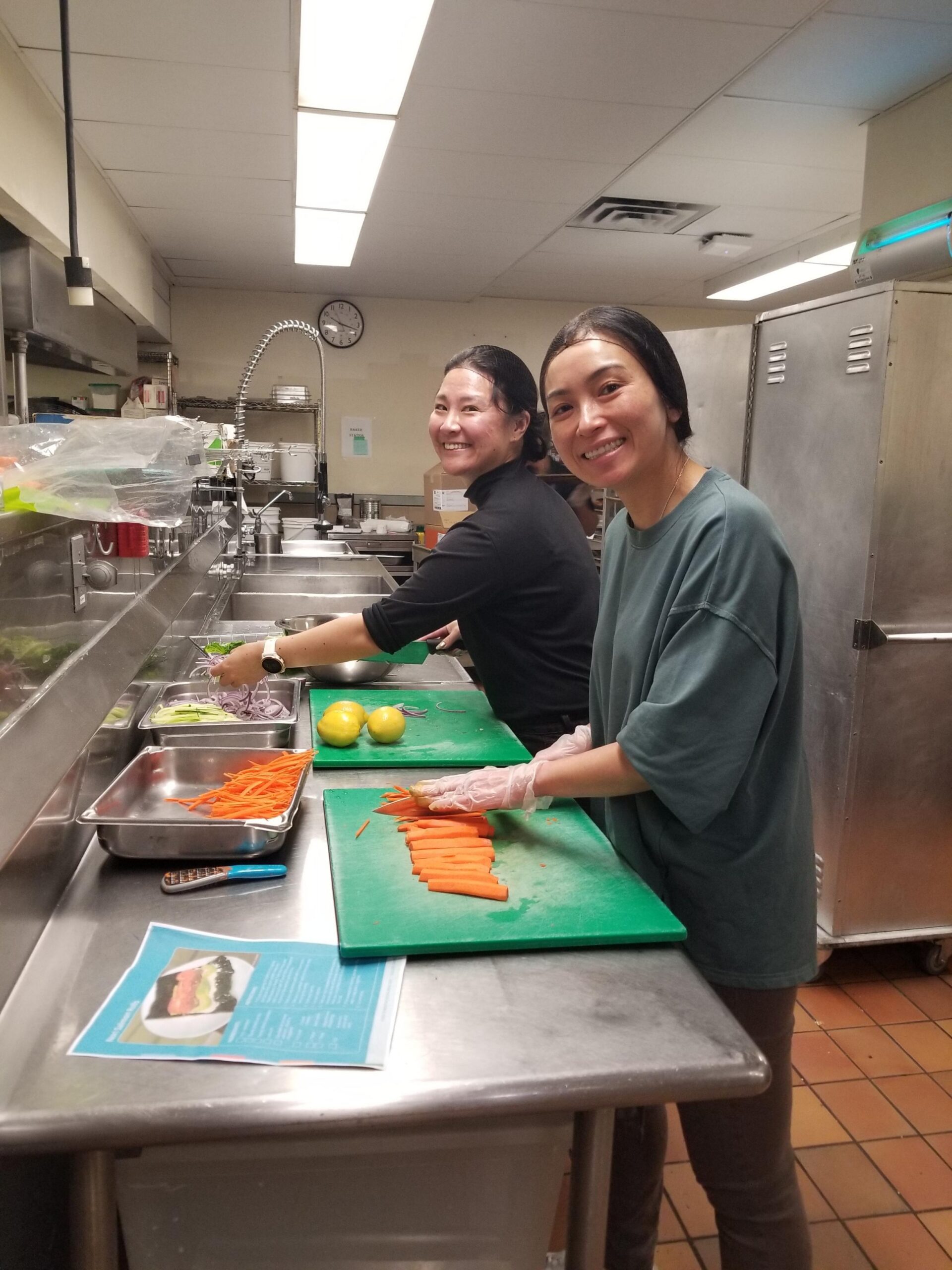
Emily Chan and Sonya Kung are bringing healing and sustainability together through culturally centred luncheons. Drawing inspiration from the teachings shared through a recipe book created by the First Nations Health Authority, they are demonstrating how sustainability and healing go hand in hand.
Inspired by the teachings in the Food is Medicine recipe book, Emily and Sonya wanted to share these learnings with staff on the Provincial Health Systems team. The book highlights the relationship between traditional foods, health, sustainability, and cultural identity, featuring recipes such as Nettle Pesto and Stwen (Wind-Dried Fish Soup). To bring these teachings to life, they applied for funding through the Sustainability Stream of PHSA’s Health Promotion Initiative Fund (HPIF), with financial support provided by the Green+Leaders program. Each year, the Energy and Environmental Sustainability (EES) team collaborates with HPIF to support Green+Leader projects that advance energy and environmental sustainability.
Emily and Sonya’s vision was to build community and promote sustainable harvesting rooted in Indigenous cultural practices. Their efforts were guided by the Coast Salish teachings of Eyhh slaxin, “Good medicine,” and Nuts a maht, “We are one,” gifted by Knowledge Keeper Siem Te Ta-in, Shane Pointe. For Emily and Sonya, the luncheon was not just about preparing food – it was an opportunity to learn about the cultural teachings embedded in harvesting and cooking, “fostering a deeper appreciation for Indigenous worldviews and sustainable living.”
The luncheon created a culturally and psychologically supportive space for participants, aligning with the objectives in the Ministry of Health’s Climate Change and Sustainability Plan. Following the luncheon, participants shared that they enjoyed learning about the concept of Food as Medicine and appreciated the opportunity to share a meal in community. For Emily and Sonya, the most rewarding part was witnessing how “food became a bridge, strengthening community, celebrating Indigenous heritage, and inspiring a renewed commitment to environmental stewardship.”
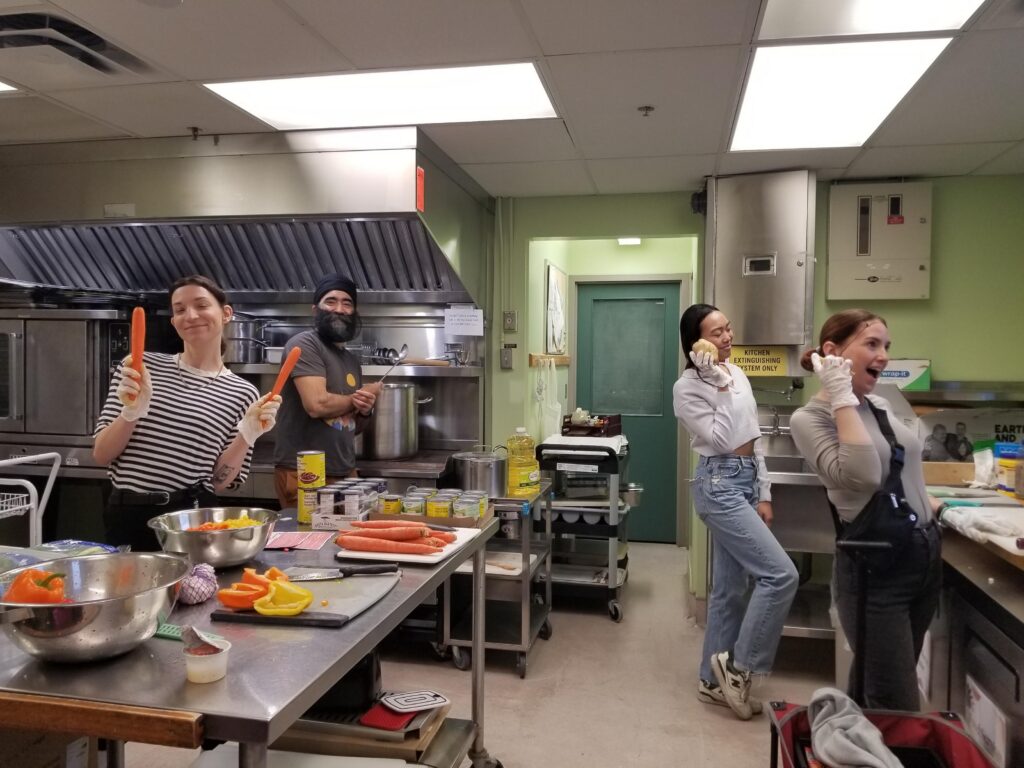
For those looking to host similar events, Emily and Sonya encourage engaging community members and partners early to ensure the event is guided by authentic voices and teachings. They also emphasize the importance of choosing a welcoming space where participants can feel connected to the land, the food, and one another. Through this luncheon, Emily and Sonya have shown that supporting local food systems and community connections can also support sustainability and healing.