Sometimes, meaningful climate action starts with something as simple as a sheet of paper.
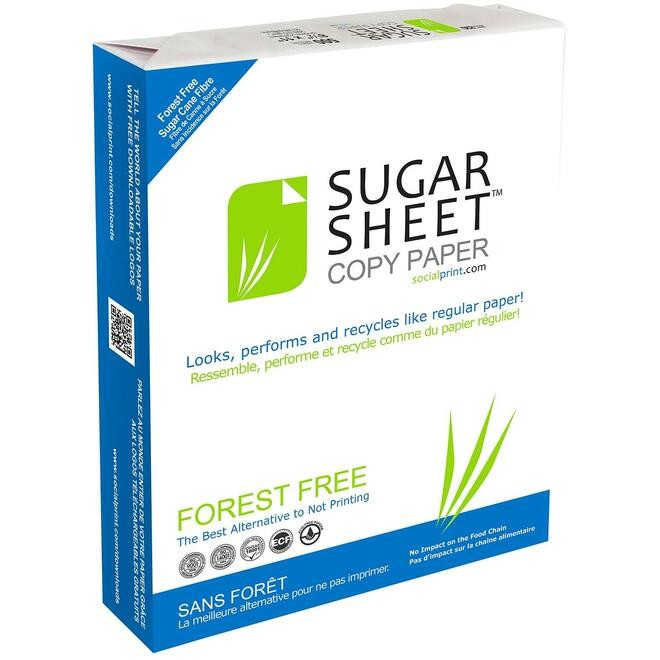
In 2024, Fraser Health, Providence Health Care, Vancouver Coastal Health, and PHSA completed a major transition to Sugar Sheet, a certified carbon-neutral paper made from sugar cane bagasse, a by-product of sugar production. Thanks to a coordinated effort led by PHSA Procurement & Supply Chain, Sugar Sheet is now the standard printer paper supplied through the Langley Fulfilment Centre (LFC), PHSA’s largest warehouse and the primary source of office paper for lower mainland health organizations.
The transition builds on Island Health’s successful adoption of Sugar Sheet in 2019 and reflects a shared commitment across B.C. health organizations to reduce the environmental impact of everyday operations. Interior Health and Northern Health also joined the transition to Sugar Sheet through a different procurement pathway, supporting the change with targeted communications and staff awareness efforts.
While paper may seem like a small item in a complex health system, its impact adds up. Compared to conventional virgin wood fibre paper, Sugar Sheet uses fewer resources, produces significantly lower greenhouse gas emissions, and saves approximately 26 trees for every tonne of paper produced. Across B.C. health organizations, the switch is expected to reduce paper-related emissions by approximately 80 per cent, equivalent to more than 3,000 tonnes of CO₂e annually, or the equivalent of taking 945 passenger vehicles off the road for one year.
Making the change required more than simply selecting a new product. PHSA Procurement & Supply Chain worked closely with health authority sustainability teams, Chief Finance Officers, IMITS Output Management, suppliers, and supply chain partners to build the business case, address performance questions, and coordinate implementation across the province.
Procurement decisions may happen behind the scenes, but they can have a significant impact when applied across an entire health-care system,” says Marianne Dawson, Sustainability Advisor, PHSA Procurement & Supply Chain. “This transition shows what’s possible when organizations work together around a shared goal. By making a lower-carbon product the standard choice, we’ve been able to reduce emissions at a provincial scale while ensuring staff continue to receive the same quality and reliability they expect.”
The project also helped advance sustainable procurement practices more broadly. By demonstrating that planetary health can be a valid driver for procurement decisions, the initiative has opened the door for future sustainability-focused purchasing opportunities.
For staff, the change is largely invisible. For the environment, the impact is substantial, proving that small operational decisions, multiplied across a health system, can help create a healthier future for people and the planet.